
Chasing for Speed | The Leica SL3-S and the Vario-Elmarit-SL 28-70 f/2.8 ASPH.
Disclaimer: This camera and this lens do not (yet) belong to me. This Leica SL3-S and this Vario-Elmarit-SL 28-70 f/2.8 ASPH. belong to the Leica Store Heidelberg. The store manager of the shop, Yannick, kindly provided me with the equipment for a very personal testing. Many thanks again at this point to Yannick and the Leica Store Heidelberg, much appreciated!
Nevertheless, I receive no commercial or financial benefit from this loan and have no business relationship with Leica. My blog contains no advertising or affiliate links. I do this purely out of a love for photography and genuine curiosity about new things. Everything I share here reflects my honest opinion, and that will not change in the future. So, as always, independent and from a real user’s perspective. 😉
As with many of my reviews, this one’s a bit on the long side and gets fairly detailed in some parts—so maybe grab a coffee or a cup of tea before diving in. Oh—and be prepared for a surprise or two. 🙂
Shortcuts to the topics:
If you’re short on time or only interested in either the camera or the lens, you can jump straight to the relevant sections here.
PROLOGUE – WHY? – Differences to SL3 – Motivation – LEICA SL3-S IMPORTANT POINTS – Sensor (resolution) – Sensor (low-light) – Sensor (speed) – Sensor (dynamic range) – IBIS – Autofocus – Video – Operation – WORTH? – Video/Hybrid – Photographers – My Choice
LEICA 28-70 – BODY – IMAGE QUALITY – Sharpness – Chromatic Aberrations – Bokeh – Colour – Flare – Vignetting – AF SPEED – THOUGHTS ON BRANDING – WORTH? – Competition – My Choice
Summary
Leica SL3-S:
The Leica SL3-S is a fast, robust, intuitive and genuinely impressive camera that gives you full access to the Leica SL and L-Mount ecosystem. It retains the excellent ergonomics, refined user experience, and premium build quality of the SL3, while delivering noticeably faster autofocus and improved sensor readout performance. That makes it a better fit whenever speed really matters, whether for photo or video. For videographers and hybrid shooters in particular, it’s the most compelling choice in the current Leica lineup.
For still photographers, the decision isn’t quite as clear-cut. If speed matters less and maximum resolution is the priority, the SL3—with its 60 MP sensor—is better suited to landscape, still life, and architectural work. In documentary and reportage photography, both cameras are equally at home, each distinguished by its own strengths. Depending on the task, the SL3-S may have a slight advantage here, thanks to its superior speed.
Verdict: If the Leica SL3 didn’t exist, I would absolutely buy the SL3-S and be perfectly happy with it.
Note: Since the release of firmware version 4.0.0—shared by both cameras—a number of changes and refinements have also been introduced to the SL3. Accordingly, all references here are based on this firmware version.
Leica Vario-Elmarit-SL 28-70 f/2.8 ASPH.:
The Leica 28–70 mm is a very good standard zoom lens that combines durability, portability and strong optical performance. It offers outstanding build quality, relatively fast aperture, consistent sharpness, refined rendering and better-than-expected bokeh for a zoom lens.
What makes this lens so compelling is the harmonious balance of all these strengths. At 35 mm, it even comes surprisingly close to the performance of the non-APO Summicron SL 35 when shooting at the same apertures.
Verdict: Compact, robust, and versatile—definitely getting one.

Prologue
This is not a full review of the Leica SL3-S. I’ve already covered the SL3 in detail, and much of that applies here, as both cameras share the same system, handling, ergonomics, and overall design.
In this post, I explore the key differences between the SL3-S and the SL3, focusing in particular on speed and sensor performance. Based on this comparison, I draw conclusions that are relevant to my own work in documentary and reportage photography, especially in fast-paced and demanding situations. I also take a closer look at the new Vario-Elmarit-SL 28–70 ASPH.

Ultimately, there are many grey areas, and it’s worth weighing your needs carefully, as I did. I hope this post helps you in some way.
One more point: although I spend a fair amount of time discussing topics like resolution and noise, they are usually far less important than many people assume. What truly matters is the overall impression—and factors such as ergonomics, or even how a camera feels in use, often count for much more. I don’t focus on this explicitly here, but these ideas are, in fact, central to the philosophy behind the Leica SL3(-S).
Sadly, the weather didn’t cooperate during the short time we had—but that’s just how it goes sometimes. 😉



Why the SL3-S?
I already own a Leica SL3—why would I want to trade it in for the SL3-S, which is inferior, at least on paper? Especially since I am known to be a photographer and not a videographer—not even a hybrid shooter.
The differences to the SL3
The SL3-S differs primarily through its 24-megapixel sensor rather than the 60 MP unit, resulting in smaller file sizes and typically improved noise performance. Beyond image quality, the different sensor also influences readout speed, continuous shooting, autofocus, and video capabilities.
This new 24 MP sensor offers a significantly faster readout speed, which, among other benefits, reduces rolling-shutter effects. It also features 779 phase-detection autofocus points—more than twice the number found in the SL3—leading to noticeably improved autofocus performance in both still photography and video recording.
The SL3-S also adds the Content Credentials System from the Content Authenticity Initiative.
In terms of design, changes are minimal: the LEICA logo and flash-shoe engraving are blacked out, giving the camera a more discreet look.


Oh—and of course, there’s the price difference. The SL3 comes in at around €6,800, while the SL3-S is about €5,200.
Personal motivation
My motivation for considering the SL3-S is simple: I don’t necessarily need 60 MP. I’m not a landscape photographer and I rarely crop my images—even with my Leica Q3—so a high-quality 24 MP sensor would be perfectly adequate for most use cases. And if it also delivers better low-light performance and smaller file sizes, all the better.
The other key factor is speed, particularly autofocus. While the SL3’s AF works well enough, I’m hoping for a clear improvement—nothing overly complex, just fast, reliable, and consistent AF performance.
Let’s see whether the SL3-S delivers on these expectations.

Leica SL3-S – The important points
OK, let’s move on to the points I just listed.
The Sensor (resolution)
We’ll start with what is arguably the most important factor: resolution. The SL3-S uses a 24 MP sensor. For a surprisingly long time, 24 MP was considered the sweet spot for resolution in digital cameras. Then the megapixel race resumed—and now, apart from sports and action photographers, 24 MP is often seen as outdated. But is it really?
My answer is both yes and no. On one hand, modern full-frame sensors offering 45 or even 60 megapixels can deliver extraordinary image quality. They are particularly appealing to landscape photographers and anyone who values extensive cropping flexibility. On the other hand, high-resolution sensors come with certain drawbacks, such as larger file sizes and slightly diminished performance at low ISO settings; however, these limitations are generally manageable.
That said, for my documentary-style photography, 24 MP is more than sufficient in most situations. When paired with high-quality lenses, image quality is excellent. I worked with 26 MP APS-C cameras for many years without ever feeling constrained, and the 24 MP full-frame sensor in the SL3-S operates on an entirely different level.
Putting personal preference aside, the SL3’s 60 MP sensor does provide a measurable advantage, producing truly impressive image quality. In uncropped images, however, the visible difference between the two sensors is negligible, if noticeable at all. Only at extremely large print sizes does any difference emerge—and even then, such prints are not examined up close.
The sensor (low-light performance)
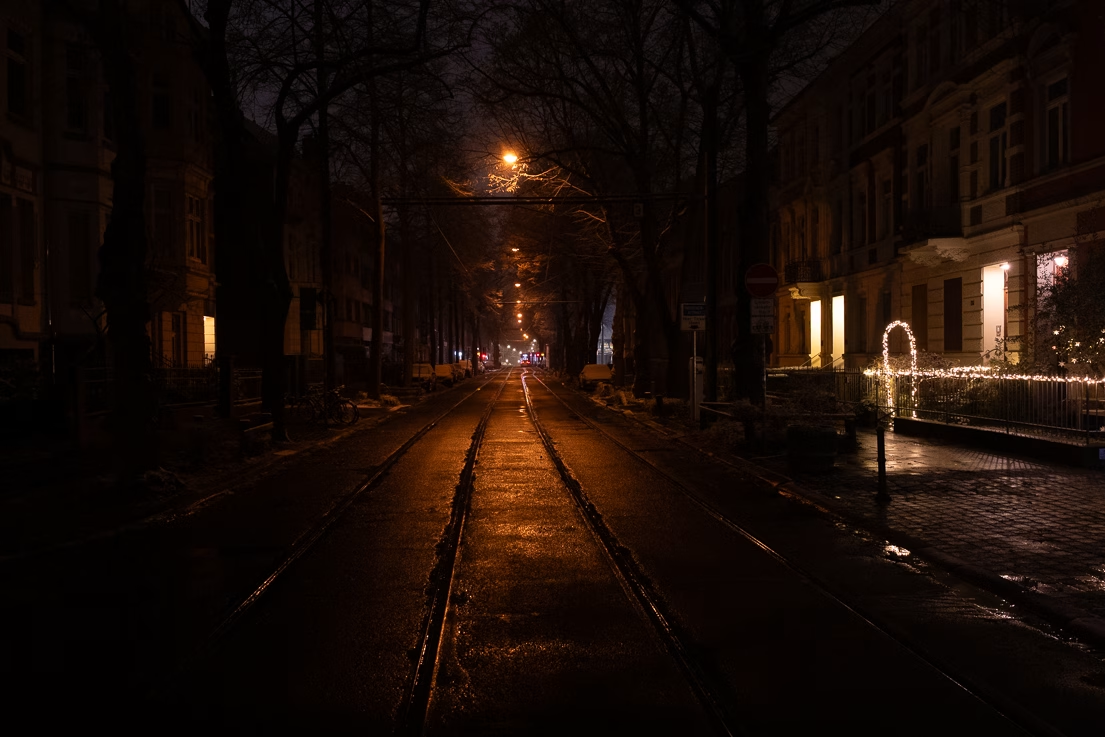
This is where things became unexpected. Contrary to my assumptions—and many reviews—I initially found the 60 MP SL3 to perform better in low light. The impression was strong enough that I reviewed far more samples than usual to confirm it.
Across a wide range of situations, from dark interiors to very low-light outdoor scenes, the results were consistent. While the comparison wasn’t fully scientific or exhaustive across all ISO values, the findings were convincing enough that I felt confident in that conclusion.


A precise comparison is difficult in web-sized images (e.g. compression-related artefacts in the panel of the shelf), but they already look very similar. To my eye, the SL3 image appears slightly cleaner, especially in the background and the colours of the book spines—a difference that’s clearer on a 4K display and in print.
Note: At 100% magnification, SL3 files do look noisier than those from the SL3-S, but this is misleading. What matters is equal output size. Viewed that way, the ISO 6400 results are not only comparable to the SL3-S, but actually look a bit better.

What’s the answer to this riddle?
So what’s happening here? I don’t think Leica has somehow rewritten the laws of physics, and I also don’t believe the SL3-S is using an older sensor. It seems much more likely that the difference comes down to processing choices rather than the sensor itself.
At higher ISO settings, images from the SL3-S often appear slightly sharper than those from the SL3—essentially the opposite of what I observe at low ISO. This points to more aggressive noise reduction being applied to the SL3 files, resulting in cleaner-looking images but with a subtle loss of fine detail. When similar levels of noise reduction are applied in post, the SL3-S appears to retain a modest advantage in basic low-light performance.
For those who care about the finer details, the SL3-S offers an expanded ISO range up to 200,000, while the SL3 tops out at ISO 100,000. In practical use, however, images from both cameras remain impressively clean up to ISO 12,500. With a bit of noise reduction, ISO 25,000 and even 50,000 are actually pretty usable for certain subjects on both cameras.


In the end, the SL3-S does seem to have a slight edge, thanks to its lower resolution and larger pixel pitch—though less than I expected.

The Sensor (speed)
The SL3-S sensor reads out a lot faster than the SL3’s, and you can really see that in use. It tops out at 30 frames per second versus 15 on the SL3 (albeit at different bit depths). More importantly, the SL3-S keeps autofocus working at its maximum frame rate, while the SL3 only does that up to 5 fps.
This speed difference really shows up when you use the electronic shutter. The SL3’s 60 MP sensor suffers from heavy rolling shutter, to the point where it’s basically unusable for moving subjects—or even if you’re moving the camera yourself. The SL3-S handles this much better. In everyday shooting, rolling shutter is far less obvious, especially with normal subject or camera movement.
So if electronic shutter performance matters to you, that’s a clear win for the SL3-S. That said, it still doesn’t come close to what you’d get from a stacked sensor, and it’s nowhere near true global shutter performance.
The Sensor (dynamic range)
Both sensors are rated at just under 15 stops of dynamic range, which is excellent. In practice, I couldn’t see any meaningful difference between the SL3-S and the SL3 here either.
The IBIS
This one is a bit tricky. On paper, the two cameras look identical. Leica claims the IBIS delivers up to a 5-stop advantage—which, like most manufacturer specs in this regard, feels optimistic. In real-world use, I’d put the SL3 closer to about 3 to 3.5 stops.
The real challenge is how to compare the two. Because the SL3 has a 60 MP sensor, blur is more obvious when you look at images at 100% on a monitor at the same shutter speed than it is with the SL3-S. But just as with ISO comparisons, what really matters is the final output size. When you compare images that way, there’s barely any visible difference. To be honest, I cannot see any significant difference in the effect of IBIS between the two cameras.
Basically, the SL3-S can still get pretty sharp shots at 50 mm and 1/8 second, but once you drop to 1/4 second, you’re kind of rolling the dice.


Multishot mode
A second major point in favor of the SL3-S—again tied to IBIS—was its multishot mode. Early on, this gave it a clear edge over the SL3. Using active sensor shift, the SL3-S can produce 48- or 96-megapixel images in this mode. Unlike the SL2-S, which offered something similar, the SL3-S can even do this handheld—you don’t strictly need a tripod.
That advantage disappeared with firmware version 4.0.0, though. The SL3 now also has a multishot mode, and it pushes things much further, all the way up to an impressive 241 MP.
So the obvious question is: does it actually work?
Honestly, I was surprised by how well it does. As long as the subject wasn’t moving and I had a reasonably stable shooting position, I was able to get sharp results at 96 MP—and even at 241 MP with the SL3—without a tripod. With a tripod, and especially in a studio setup, it would clearly be even more reliable.


It’s not a feature I personally care all that much about, but I can definitely see the appeal. And yes—it really does work.
The autofocus
This section will likely be of particular interest, but it’s also a bit more complex—so it’s important to be clear about exactly what we’re comparing. Autofocus differences between the SL3 and SL3-S range from subtle to significant. We’ll go step by step, starting with the areas where the differences are most noticeable.
General statement:
Before my evaluation, it’s worth noting that Leica has completely revamped the autofocus system with firmware 4.0.0 for all Q and SL3 cameras. Based on my experience so far, the AF feels noticeably more capable and refined, clearly reflecting a thorough and well-considered update.
The result fits Leica’s menu philosophy perfectly: flexible enough for real-world needs without unnecessary complexity. While it lacks some of the ultra-specific options found in competing systems, the menus remain intuitive and the autofocus performance is more than sufficient in practice—at least for my needs.
Verdict: Since the update, autofocus across the SL3 lineup is competitive for most real-world scenarios. Anything beyond that feels either gimmicky or only relevant for niche action or sports use—and not something I personally need.
For video:
I’m deliberately holding back here, as I don’t shoot video. That said, I did briefly compare the two out of curiosity, and it’s immediately clear that video autofocus on the SL3-S is unequivocally superior. Tracking people and faces in video mode—especially when they’re in motion—operates on an entirely different level. Period.
Face/object detection & tracking
As mentioned earlier, the SL3 has improved noticeably in this area with firmware version 4.0.0. Even so, when it comes to tracking moving subjects or using subject recognition (faces, eyes, animals, and so on), the difference between the two cameras is still clear. The SL3-S is simply stronger. It locks onto subjects faster, maintains focus more reliably, and handles faster-moving targets better, resulting in a much higher hit rate. This autofocus advantage also helps explain why the SL3-S can achieve much higher frame rates while still using AF.
In low light:
I wasn’t able to spot any significant autofocus differences between the SL3 and the SL3-S in poor or low-contrast conditions, whether in terms of speed or accuracy. With a bit of imagination, you might spot a slight edge for the SL3-S here—but it could just as easily be wishful thinking.
For stills:
My take on this is pretty much the same as with the previous low-light question. For me, AF-S feels just as fast and accurate on both cameras. I’ve never measured it, but since I can’t notice any difference in real-world use—even when I’m really paying attention—I’d say any claimed difference is completely overblown.
Video
Here, too, I’ll refrain from offering a detailed opinion, simply because I lack hands-on experience. Videographers could easily devote an entire chapter to this topic alone. Beyond the autofocus performance mentioned earlier, one clear highlight of the SL3-S is its ability to record up to 6K Open Gate video, along with a range of highly efficient codecs and, of course, F-Log. Another highlight is likely the new support for de-squeezing recordings made with anamorphic lenses.
That said, I’ll leave it to more experienced video shooters to judge how well all of this performs in practice.
Operating Performance
I’m not raising this as a distinction between the SL3 and the SL3-S, as both cameras behave essentially the same in terms of operation, menu navigation, and image review.
Rather, I want to emphasize the significant performance improvements introduced with firmware 4.0.0. This is especially evident in start-up times: both cameras are ready for use in under a second, even from a cold start, and they wake from standby with virtually no perceptible delay. That’s genuinely impressive.
All other operations—including connecting to and interacting with the Leica Photos app—are also very fast and thoughtfully designed from an ergonomic standpoint.
Is it worth purchasing or switching?
Here’s where things get interesting again. There’s no straightforward answer, because it ultimately comes down to personal preference and—most critically—how you intend to use your gear. To make things easier, I’ll separate my thoughts for photographers, and for videographers or hybrid creators, grouping the latter together.
Videographers/Hybrid Shooters
Let’s begin with the simplest category. For video work—whether it’s the primary purpose or a secondary consideration—the clear choice is the SL3-S. There’s little room for debate here. The SL3-S holds a decisive advantage, particularly with its significantly superior autofocus performance, 6K Open Gate recording, etc. Additionally, its faster sensor and reduced rolling-shutter effect further strengthen the case in its favour.
Photographers
In the end, it really comes down to what you value most and what you expect from your camera. Two things apparently work in the SL3-S’s favor: speed—especially autofocus and burst performance—and much smaller file sizes (around 35 MB versus roughly 75 MB). In practice, however, this latter advantage is entirely negated by the SL3’s ability to shoot at 36 or 18 MP, even in RAW. But if speed matters to your workflow, the choice is pretty straightforward.
If not, the SL3 will probably make more sense for most photographers. Its 60 MP sensor delivers a consistent edge in image quality, offers far more flexibility for cropping, and still performs very well in low-light situations. As with the Leica Q3, I am continually impressed by the purely technical image quality delivered by this sensor—it is truly remarkable.
That said, there are a few grey areas where the decision can swing either way. If you depend on the silent electronic shutter for weddings, theatre performances, or similar scenarios, the SL3-S is the safer bet. The rolling shutter on the SL3 is so pronounced that even small movements can become visible, which is a real drawback in those situations.
My choice
Even for my own use, the choice isn’t completely straightforward. The SL3-S is tempting, especially because of its speed and the reliability of its autofocus for subject detection and tracking. That autofocus isn’t just an advantage for sports or action—it’s also very appealing for fast-paced, hectic reportage work, which is what initially caught my interest.
And then there’s the price: the SL3-S Kit with the 28–70 comes in at less than the SL3 by itself.
After thinking it through, though, I realised two things: first, the difference is simply too small for my needs, and second, I don’t actually need that level of speed very often. When I take into account that I already own the SL3, along with the advantages of its high-resolution sensor, the decision becomes obvious. I’ll be sticking with the SL3.
However, if the SL3-S had come out first, or if I already owned one, I’d be perfectly happy with it and wouldn’t feel limited at all. The only thing that might make me reconsider would be getting into video work—but that’s not on the horizon for me right now.
On a completely different note, and especially appropriate for these cold days: in my experience, the Leica SL cameras—no matter the model—are the best system cameras to operate with gloves on.

Some last words to the speed thing
Since I mentioned it in the title, here’s a brief clarification. Yes, the Leica SL3-S is undoubtedly the fastest camera Leica has ever brought to market—and yes, I personally find it more than fast enough.
Does that make it comparable to the fastest SoNiCanon cameras in terms of outright speed? Absolutely not. It lacks both a stacked sensor or a global shutter, and its processor and algorithms are unlikely to match those of today’s speed champions. That’s simply a reality worth acknowledging.
Within the Leica ecosystem, this increase in speed may well be a compelling argument in favor of the SL3-S—but not necessarily beyond it. But it is the overall picture of this camera that counts for me, whereas others may prioritize different criteria.
That said, I’m confident that around 95% of SL3-S buyers are fully aware of this and choose the camera regardless. I would do the same. The remaining 5% likely haven’t done sufficient research and will probably end up selling it again.
The Leica Vario-Elmarit-SL 28-70 f/2.8 ASPH.
I’ll now turn to the second part of this review: Leica’s new 28–70 mm zoom. For me, this lens is almost more important than the SL3 vs. SL3-S question—especially given my general dislike of large, bulky lenses.
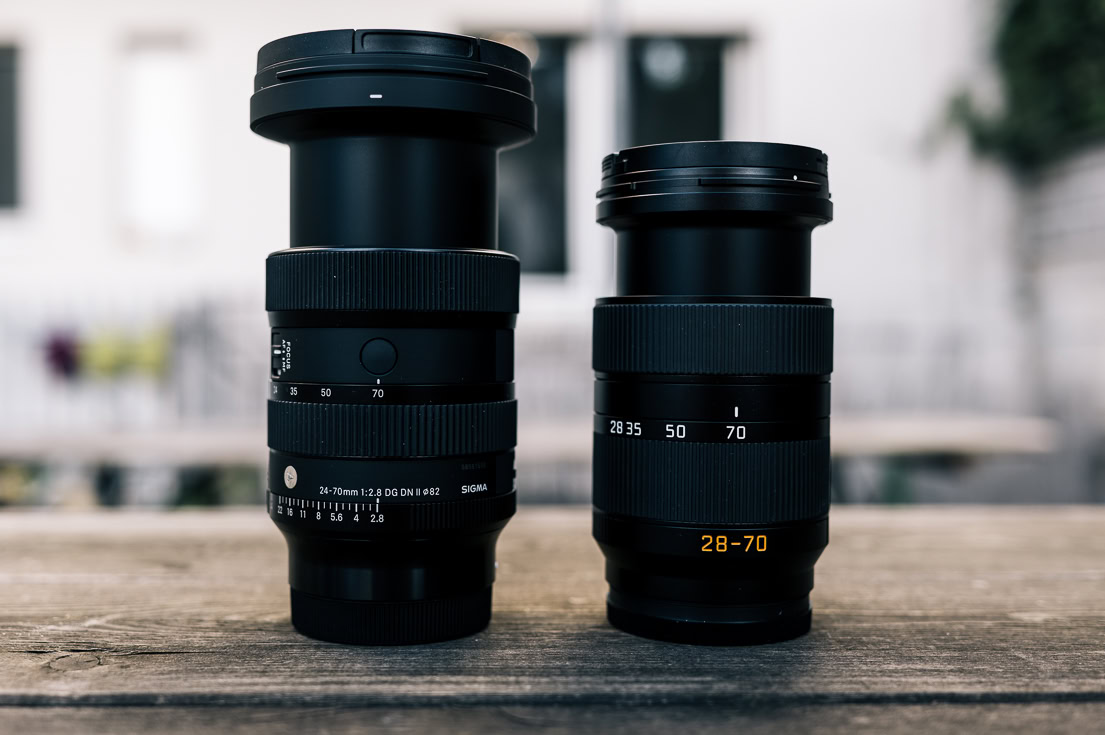
I currently own the Sigma ART 24–70 mm f/2.8 DG DN II. It’s an excellent lens and even lighter than Leica’s equivalent SL zoom, but it’s still noticeably larger and heavier than the new 28–70 mm. Not dramatically so—but enough to matter.

The body
It’s an SL lens through and through: high quality, weather-sealed, and built like a tank. Both the zoom and focus rings are extremely smooth and wonderful to operate. As usual, the design is extremely puristic—no buttons, no switches, no sliders, and no aperture ring. Some photographers appreciate this minimalism; others less so.
If this philosophy appeals to you, it’s an easy recommendation. This is a lens that will very likely last a lifetime.


It’s also worth noting that it is relatively light and compact—especially for an SL zoom. It weighs just 572 g and measures 102 mm in length with a diameter of 73 mm, using 67 mm filters. Incidentally, this compact size and low weight are among the main reasons why this lens has caught my attention.
By comparison, the Sigma ART 24-70 weighs 745 g and is 120.2 mm long, with a diameter of 87.8 mm and a filter size of 82 mm.
The image quality
I haven’t personally used the corresponding Sigma zoom, which belongs to Sigma’s Contemporary line rather than Art or Sports. That distinction is largely irrelevant to me in Leica-branded form and is mentioned only for completeness.
Leica clearly didn’t adopt this optical design by accident, nor would it risk its reputation on a mediocre lens. Optically, the result is very strong: sharpness is very good to excellent across the focal range, rendering is pleasing, and the bokeh is surprisingly attractive for a zoom.
Does it match lenses like the Vario-Elmarit-SL 24–90 or the APO-SL primes? Of course not—and it shouldn’t, especially given the price difference. In real-world use, however, the gap between at least these zooms is smaller than often suggested, including comparisons with the 24–70 mm options.
I didn’t conduct lab tests, but I did look closely: tripod-based comparisons with the Sigma ART 24–70 mm, alongside real-world shooting, gave me a solid overall impression.
Sharpness/Contrast:
Both lenses easily meet my sharpness requirements and unmistakably feel like premium tools. Choosing a clear overall winner in terms of sharpness is difficult, especially since performance varies across the zoom range: the Leica has a slight advantage at the wider ends, while the Sigma pulls marginally ahead around 70 mm.
That said, the Leica zoom earns a small edge for consistency, delivering more even sharpness from centre to edges and corners—most noticeably at 28mm and 35mm. Even this observation, however, may partly come down to sample variation between individual lenses.
In real-world use, these differences are so minor that they’re largely negligible. On the 24 MP SL3-S in particular, they’re barely noticeable at all.
Just keep in mind that, like most zoom lenses, the Leica 28–70 does have its limits. For example, if you’re shooting at 70 mm with the aperture wide open and getting really (!) close to your subject, sharpness is going to drop significantly. That’s not a flaw so much as a design trade-off—correcting that would take some seriously complex optics, and the lens would end up much bigger and a lot more expensive.
CHromatic aberrations:
The Leica 28–70 isn’t completely free of chromatic aberrations—both lateral (LaCA) and longitudinal (LoCA) can show up. That’s not really surprising, though. It’s not an APO lens, it’s not even a highly corrected prime either—it’s a fast zoom.
However, both LoCA and LaCA are handled pretty well and aren’t very noticeable in real-world use. LoCA, for example, only shows up at very close distances and mainly at 70mm with the aperture wide open—where you will notice a bit of color fringing. And honestly, the Sigma ART 24–70 is known to behave pretty much the same in this area, which lines up with my experience too.


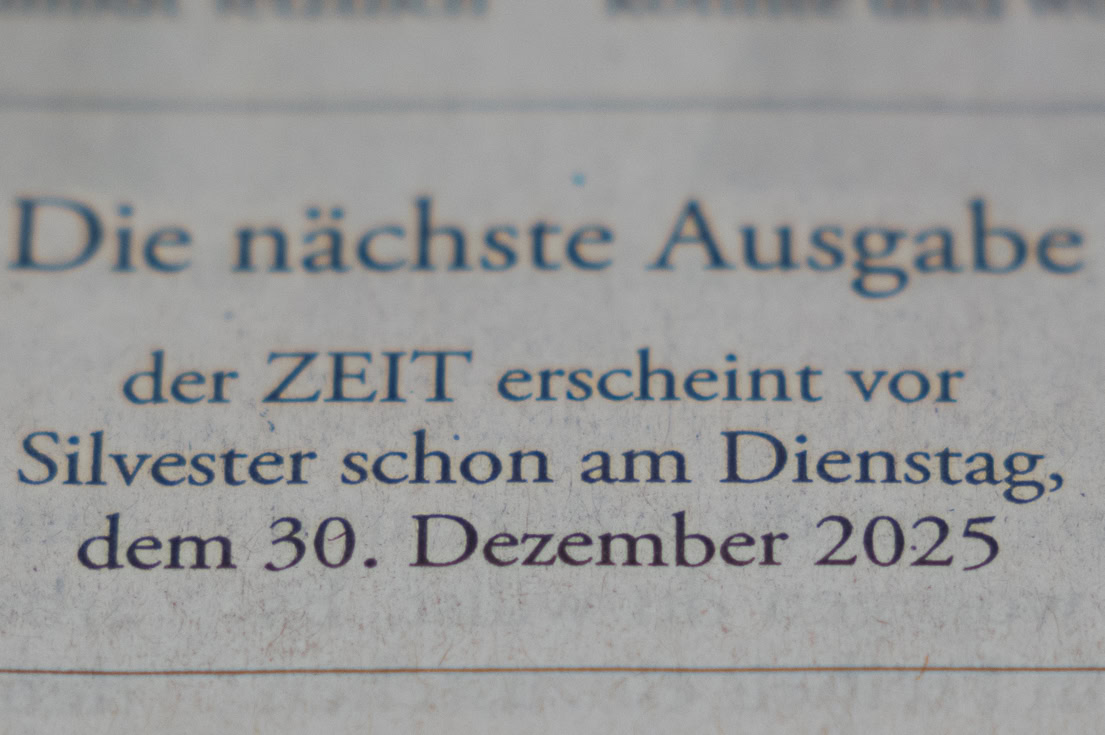
Please bear in mind that this comparison is simply a nerdy exercise intended to examine the details and show things as they truly are. In practice, no one would seriously attempt to take any worthwhile photograph with such lenses wide open from a distance of just 40 cm (!).
So overall, it’s not something I’d worry about at all. In practice, it just doesn’t really matter.
Bokeh:
As I mentioned earlier, this was one of the biggest surprises for me. The bokeh looks really nice across the entire zoom range, not just “good for a zoom.” Sure, at f/2.8 it’s not a bokeh monster, but it’s more than enough to separate your subject and get a pleasing, smooth background.


Colour:
Some reviewers talk about the Vario-Elmarit 28–70 having “particularly beautiful colours.” Honestly, I’m never quite sure what to do with a claim like that. Yes, the colour rendering isn’t identical to something like the Sigma ART, but the differences are so subtle that I couldn’t honestly say one is better than the other.
To my eye, the colours are mostly very realistic and neutral—definitely well saturated, sure—but that feels less like some kind of magic colour signature and more like a result of the lens’s overall quality and coatings.
Flare:
Flare is handled really well thanks to the excellent coating. Even when shooting straight into the sun, the image still holds onto a good amount of contrast. Any flare spots are very subtle and only show up at certain angles.


Vignetting:
It doesn’t really bother me—I often like the effect, or even add it later in post. For completeness, though: at f/2.8 there’s noticeable vignetting at all focal lengths. From f/4 it’s mostly gone, and by f/5.6 it disappears completely.
The AF speed
The autofocus is quiet and feels really fast. I didn’t measure it, but it seems just about as quick as the non-APO Summicron SL 35, if not the same. And that lens is known for being one of the fastest-focusing options in the SL lineup. Honestly, I couldn’t really tell any difference compared to the Sigma ART 24–70 either.
For me, the AF speed of the 28–70 is more than fast enough, even when tracking subjects.
Is there an elephant in the room?
Finally, I come to one of the favourite topics of many Leica haters – the alleged rebranding of some products. This usually refers to the re-release of cameras (mostly from Panasonic) or lenses (mostly Sigma, sometimes Panasonic) as Leica products. I will only refer to the lenses here.
OK, what are the facts?
Yes, there are currently seven lenses in the SL lineup that—at least on paper—appear to share identical optical formulas with lenses from Sigma or Panasonic. These are:
- Summicron-SL 35 f/2 ASPH.
- Summicron-SL 50 f/2 ASPH.
- Super-Vario-Elmarit-SL 14-24 f/2.8 ASPH.
- Vario-Elmarit-SL 24-70 f/2.8 ASPH.
- Vario-Elmarit-SL 28-70 f/2.8 ASPH.
- Vario-Elmarit-SL 70-200 f/2.8 ASPH.
- Vario-Elmar-SL 100-400 f/5-6.3
The two Summicrons appear to be comparable to Panasonic lenses, while the zooms are all comparable to Sigma lenses. Incidentally, these lenses are not only recognisable when comparing their optical design, but also by their price. They are significantly cheaper than the other SL lenses.
Furthermore, the two fixed focal length lenses mentioned above are manufactured by Leica in Portugal. I am uncertain about the zoom lenses, though they are apparently manufactured in Japan, possibly under license from Sigma; however, I cannot confirm this.
What does that mean?
I don’t know for certain. 😉
As noted in my disclaimer, I have no privileged connection to Leica and no insider information. My conclusions are based solely on publicly available sources and on statements made by Leica itself.
Leica’s cooperation with Panasonic is long-standing, as is its collaboration with Sigma. Within the SL system, this is reflected in the L-Mount Alliance—whose purpose is precisely to enable technical and strategic cooperation.
These lenses are either manufactured by Leica or produced specifically for Leica to its quality standards. Each incorporates a distinct SL-style lens body, designed for the robustness associated with the SL system. This alone should contribute to higher overall build quality and reduced sample variation.
To the best of my knowledge, the lens coatings—at least on the outer elements—also differ in some, if not all, models from those used in comparable lenses from other manufacturers.
Does it matter?
Whether you prefer Leica lenses or those from other manufacturers is entirely a matter of personal choice. Price certainly plays a role, but so do quality standards and—particularly with zoom lenses—your preferred form factor. Sigma zoom lenses, for example, typically feature an aperture ring (not the 14-24, the 28-70 and the 100-400, though) along with various buttons and switches. Leica’s SL zoom lenses, by contrast, follow a deliberately purist design philosophy and are built to be exceptionally robust.
In summary, this certainly does not mean that Leica simply takes another manufacturer’s product and puts a red dot on it. There is considerably more to it than that. As far as I’m concerned, it’s Leica lenses. Period.
But isn’t it great to have a choice?
I chose the Leica Summicron as my 35 mm prime lens and will also be adding the Leica 28–70 mm to my kit (a small spoiler).
Is it worth purchasing or switching?
The competition
That’s not an easy question to answer, especially with so many factors to consider. One thing that stands out, though, is the surprisingly broad selection of lenses that can serve as standard zoom alternatives for the L-mount system. Below is an overview of all the available options:
- Panasonic S 24-60 f/2.8
- Panasonic S-Pro 24-70 f/2.8
- Sigma 24-70 f/2.8 DG DN II Art
- Sigma 28-70 f/2.8 DG DN Contemporary
- Leica Vario-Elmarit-SL 24-70 f/2.8 ASPH.
- Leica Vario-Elmarit-SL 28-70 f/2.8 ASPH.
- Leica Vario-Elmarit-SL 24-90 f/2.8-4 ASPH.
Phew—that makes seven options in total. And beyond the differences in focal length ranges and maximum apertures, there’s a lot more to weigh. Build quality and optical performance can vary significantly from one lens to another, and price is a major factor as well. In fact, the lineup spans roughly from €800 all the way up to €5,550, a remarkably wide gap.
My choice
For me, the Leica 24–90 and the Panasonic S Pro 24–70 are simply out of the question because of their size and weight—and in the Leica’s case, also because of the price. A zoom lens just isn’t worth that much to me—in contrast, perhaps, to one of the fascinating APO prime lenses. The Sigma 28–70 is also off my list, mainly due to its less robust build.
That leaves the two remaining Leicas, the Sigma ART, and the small Panasonic. I don’t have any hands-on experience with the latter yet, but I find it genuinely interesting. It’s small, lightweight, and covers a focal length range that works really well for me. Definitely a compelling alternative, especially if you’re keeping an eye on your budget.
If it absolutely had to be a 24–70, I’d stick with the Sigma ART—and that’s exactly what I’ve been using up to now. The ART is excellent, well built, and easily good enough for what I need. In that case, the extra cost of the Leica version just doesn’t feel justified to me—especially since it is even heavier than the Sigma. Nevertheless, I understand why many prefer the distinctive SL lens design and its unrivalled robustness—an opinion I largely share.
So here I was again, down to the same old choice: the Leica 28–70 or the Sigma ART 24–70. And this time I went with—drum roll—the Leica. So I went ahead and bought it, and it will replace my Sigma. There is, of course, one minor drawback—the loss of 4mm at the wide end—but trade-offs are inevitable.
In the end, it was simply the whole package that did it for me. Size, weight, robustness, performance—it all just came together in a way that felt right.
There is always light somewhere – go out and shoot!

Hi Peter,
Thanks for another excellent in-depth review. The only addition to, or replacement of my Q would be another Q or an M11-P (for the larger choice in 28mm or 35mm lenses)
Enjoy your weekend!
Jan
Hi Jan,
thanks for your comment. And, of course, no SL would ever be a replacement for my Q. It’s an addition…
Take care of yourself in the winter weather!
Peter
The low light performance of the Leica SL3-S looks good. Did you find the autofocus reliable during the ceremony?
Hi Yana,
Yes, the low-light performance is very good, as expected. But what do you mean by “during the ceremony”?
Peter
Thank you for this detailed and honest hands-on review of the Leica SL3-S and the new 28-70mm lens. It’s fascinating how you break down the “resolution vs. speed” debate and show that 24 megapixels can still be the sweet spot for documentary work. My tip for you: Since you mentioned the impressive performance of the 28-70mm at 35mm, you could try a “one-lens, one-day” challenge specifically at that focal length to see if it can truly replace your prime lenses in a real-world reportage setting.
Hi Marc,
thanks for reading and for your idea! But I will never replace a small(er) prime with a bigger zoom lens. For me, a zoom lens is a versatile option when being on a set or within a special project. I would never walk around with such a huge combination or take this with me on a trip. I am and will always be a prime lens guy… 😉
Peter
Lieber Peter,
ich bin über deinen Blog gestolpert. Sehr toll!
So wie ich über den Blog gestolpert bin, bin ich letztes Jahr über die Q3 43 gestolpert und habe mich verliebt!
Ich habe sie immer, immer dabei.
Trotzdem habe ich mit der Zeit gemerkt, mir fehlt die Möglichkeit die Linse zu wechseln. Nach langem hin und her überlegen habe ich mich für die SL3 entschieden. Keine M. Auch wenn ich die Tradition und Magie der M total gut verstehe, ich will frei sein in der Wahl meiner Linsen und mit/ohne AF.
Weil ich gerne manuell fokussiere, nutze ich M Linsen mit Adapter und L Linsen.
Aus Kostengründen habe ich „nur“ das Summilux 21mm von Leica und das Nokton Voigtländer 35mm beides M-Mount (obvious 😊)
Für L-Mount habe ich das APO Summicron 75mm und das 105mm Art von Sigma.
Warum erzähle ich das? Weil ich bisher niemanden gefunden habe der mir ehrlich weiterhelfen kann/ möchte. Entweder mir wird versucht die SL auszureden oder Leica oder nur Leica oder nur M-Mount Leica… aber niemand hört mir so wirklich zu. Habs sogar mit ChatGPT probiert, first time ever – und will doch einfach nur ne ehrliche Meinung/ Empfehlung. Und liebe Männer nehmts mir nicht übel, nicht impressed werden vom männlichen Wissen. Oder belächelt werden. Auch ich als weiblicher Mensch betreibe ernsthafte Fotografie.
Ich weiß, ich mag die 35mm sehr. Mich faszinieren die 21mm aber meist nutze ich die 35mm. Jetzt ist mir das Voigtländer irgendwie zu trocken/kühl/klinisch/flach in Farbe. Bei SW bin ich happy. Ich wünsche mir also noch ein 35mm. Aber welches?!? Und warum? M Mount?!? Sigma?!? L Mount Leica?
Dazu muss ich anmerken, ich bin eine kleine, zierliche Frau. Aber die Größe der SL stört mich nicht. Auch das Gewicht ist ok. Habe jahrelang Kinder geschleppt…
Durch das Sigma 105mm (mal wieder so ein Zufallskauf) bin ich für Sigma sehr offen. Ich könnte mir auch ein klassisches Leica 35mm M-Mount vorstellen aber wirken die auf dem SL Sensor?
Die Prime APO 35mm von Leica sind teuer aber super…
Ok, Text ist lang genug geworden. Evtl. hab ich ja, bei Dir mehr Glück und Du kannst mir ein paar gute Tips geben.
Einen schönen ersten Mai.
Hella
Hallo Hella
Problem hört sich für mich, bekannt an:
– ja Q3 43 macht süchtig, aber manchmal muss es breiter als 43 oder länger als 150mm sein
-SL2s oder SL3s ist die Ergänzung für Weitwinkel oder Zele, da braucht es kein croppen also reichen 24MP
– Wofür brauchst Du das 35mm
=> wenn offenblende und schnell, dann AF SL 35 APO gebraucht. Weil 1x apo heisst verwöhnt, Perfektion bei Offenblende
=> wenn Zeit vorhanden und Tiefenschärfe notwendig oder erwünscht MF, Voigtländer gebraucht oder 60 – 70er Jahre Optik von Leica lädt zum experimentieren ein.
FAZIT Die Anforderungen Deines Projektes bestimmen das Werkzeug nicht umgekehrt. Der Zahnarzt verwendet auch kein Leatherman weil es doch so schön ist
Hallo Hella
Problem hört sich für mich, bekannt an:
– ja Q3 43 macht süchtig, aber manchmal muss es breiter als 43 oder länger als 150mm sein
-SL2s oder SL3s ist die Ergänzung für Weitwinkel oder Zele, da braucht es kein croppen also reichen 24MP
– Wofür brauchst Du das 35mm
=> wenn offenblende und schnell, dann AF SL 35 APO gebraucht. Weil 1x apo heisst verwöhnt, Perfektion bei Offenblende
=> wenn Zeit vorhanden und Tiefenschärfe notwendig oder erwünscht MF, Voigtländer gebraucht oder 60 – 70er Jahre Optik von Leica lädt zum experimentieren ein.
FAZIT Die Anforderungen Deines Projektes bestimmen das Werkzeug nicht umgekehrt. Der Zahnarzt verwendet auch kein Leatherman weil es doch so schön ist