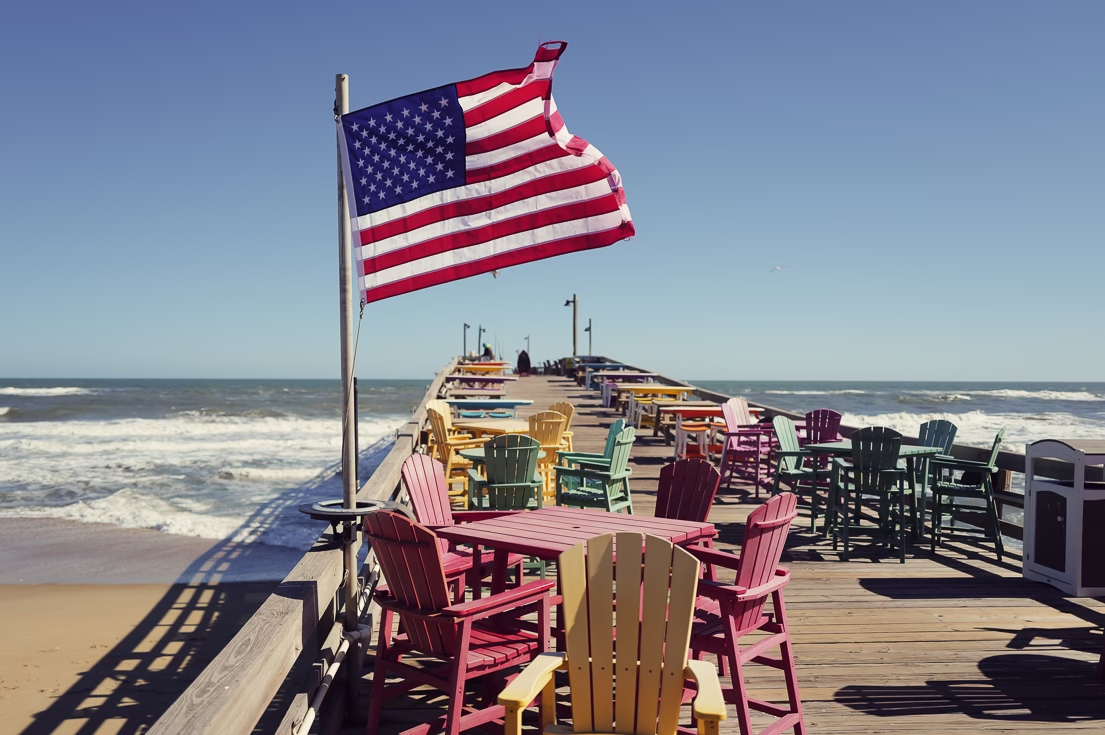
Time Machine Outer Banks – The America of Mom and Pop (?)
Prologue
In my recent review of Joel Sternfeld’s photo book Nags Head, I mentioned that I wanted to return to this subject. I don’t mean Nags Head or the Outer Banks itself, or even vacations, but time and space. Not the time and space of relativity theory, of course, but the kind we carry within us: how a place feels, how we perceive it, and how time seems to stretch or stand still while we are there.
We’ve been living in the U.S. for a good seven months now, trying to get to know and understand this country and its people as best we can. In a land so vast and so varied, that inevitably means setting out on the road, sometimes just around the corner and sometimes far beyond it. Time and circumstances don’t always allow for it, unfortunately. Daily life and work still lay claim to most of our days.
Still, we’ve had the privilege and good fortune to explore a few places that are, by American standards, practically next door. We wandered by car for a few days at a time, and once for two whole weeks. Our most recent little escape carried us to Nags Head on the Outer Banks.
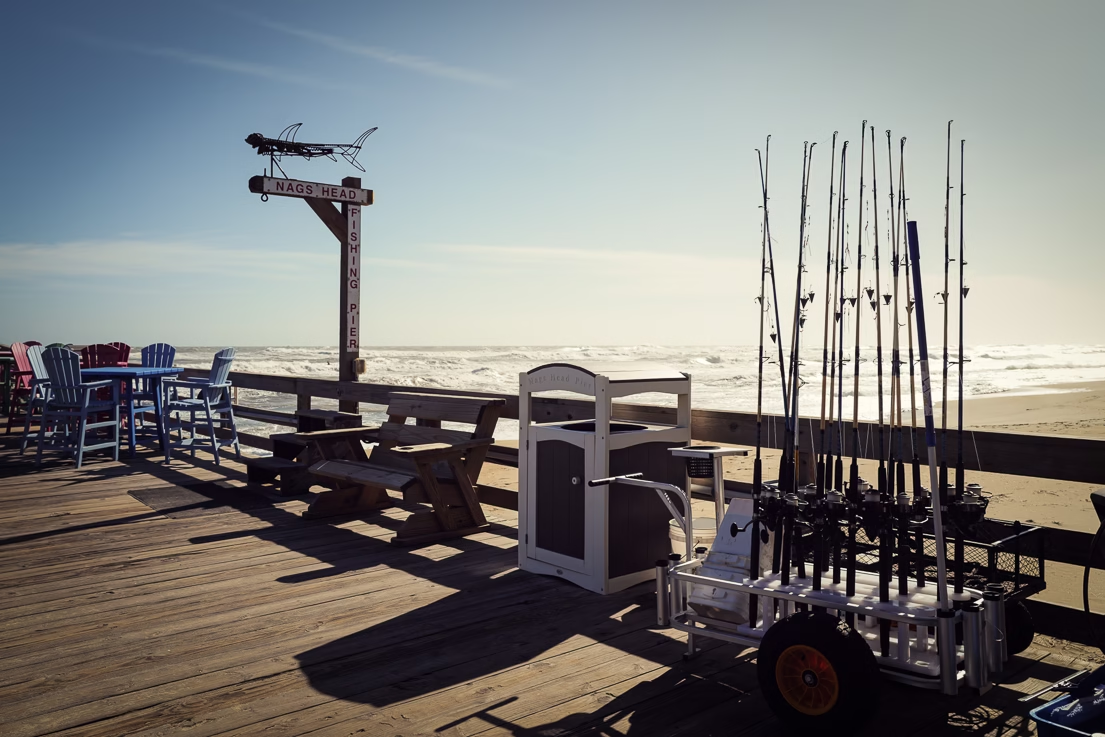
The Beauty of Nags Head and the Outer Banks
So what does Nags Head have to do with space and time, or with a time machine? Quite simply, it is one, as are parts of the Outer Banks in general. The place resists being pinned to any particular era. It seems to drift somewhere outside the calendar, or to have stayed behind in a time that has quietly slipped away. That is why it still feels a little like Mom and Pop America. At least that’s how it felt to me. And that’s strange, because I’m not American and have no childhood summers here to remember. But America seeped into my childhood through movies and television, so deeply that I always pictured it just like this: somewhere between Jaws and American Graffiti.
But let’s step back for a moment. Where exactly are we? Nags Head lies in the northern reaches of the Outer Banks, a slender chain of islands strung along the coast of North Carolina. Some are linked to one another, some barely hold on. From the Virginia border they run south for an impressive 200 miles or more, a thin line of sand between the mainland and the open Atlantic. And they are truly beautiful. Put very simply, the area around Nags Head is known for two things: dunes that look as if they had drifted over from Morocco, and beaches that are endless. I really do mean endless.


The Struggle
Yes, the ocean is beautiful, and walking barefoot along the shore for hours, with nothing but wind and surf for company, is a gift. But that’s not really what this is about.
It’s about a struggle, one many of us know all too well: the old tug-of-war between modernity and tradition, between rushing and lingering. In Nags Head and the towns around it, that struggle is written everywhere, in weathered wooden cottages and in neon-lit beach stores alike. You might call it something else: the quiet resistance of a coastal culture with deep roots against the restless, ever-hungry tide of tourism. Sometimes fewer than fifty meters separate these two worlds, and you can cross from one into the other in a few steps. It is never more than half a mile. Which of these two worlds you prefer is for you to decide. Which one I prefer, I’ll leave to your imagination.
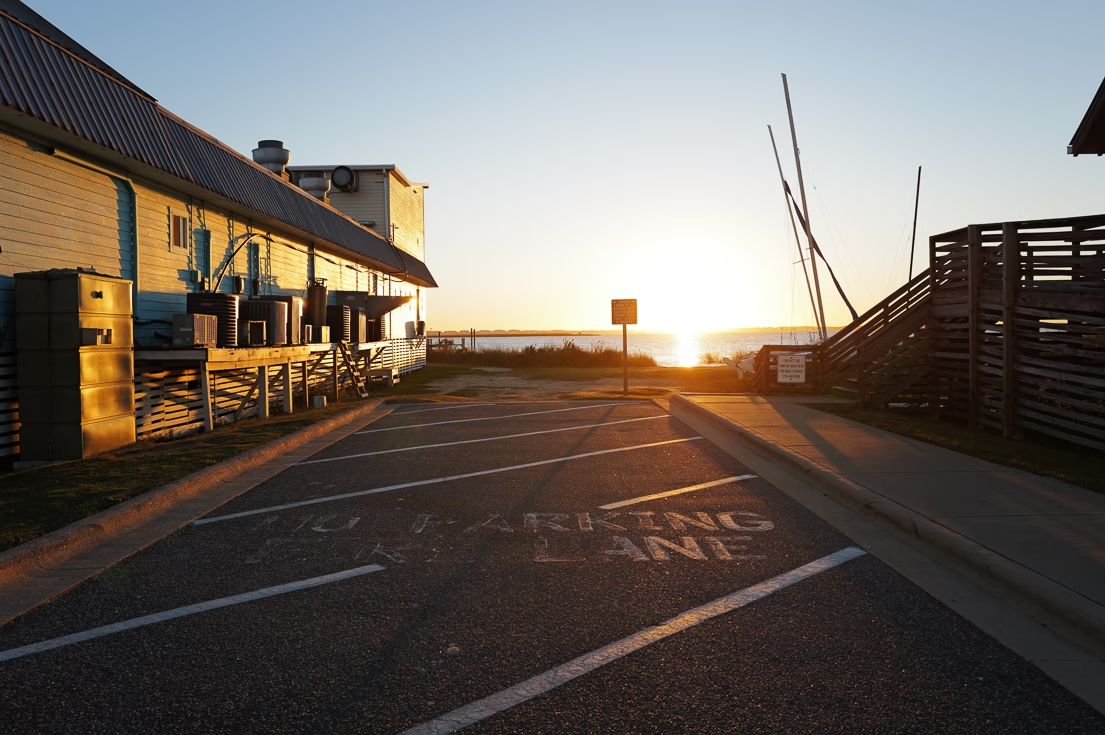
Here’s the one—for some, an ideal world:


And here’s the other, equally real world right around the corner:


The Fishing
I have rarely, if ever, felt any desire to go fishing. Well, maybe once, while watching A River Runs Through It. But otherwise, never. Here, though, I could picture myself with a rod in my hand, even if I’d secretly hope to catch nothing at all and be spared the killing. Like those very kind older gentlemen who told us they’ve been coming here together for 37 years, simply to share this time on the beach. “We rarely catch anything—really, only sometimes”, one of them told us. 🙂
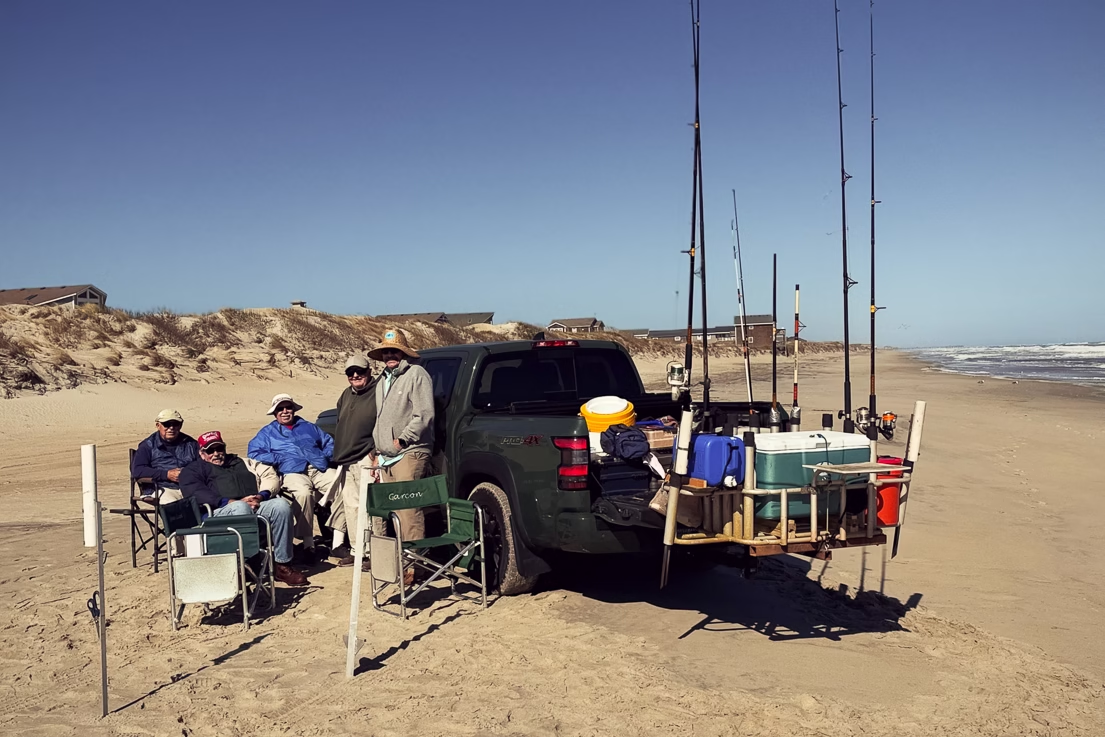
However, there is something meditative about the anglers who are always there, standing at the water’s edge, and it draws you in.


It really is a special, wonderful world. At least outside of peak season. I’m not sure I’d want to be there in mid-July, when the needle on the time machine’s dial surely swings much closer to the present.
The Sword of Damocles
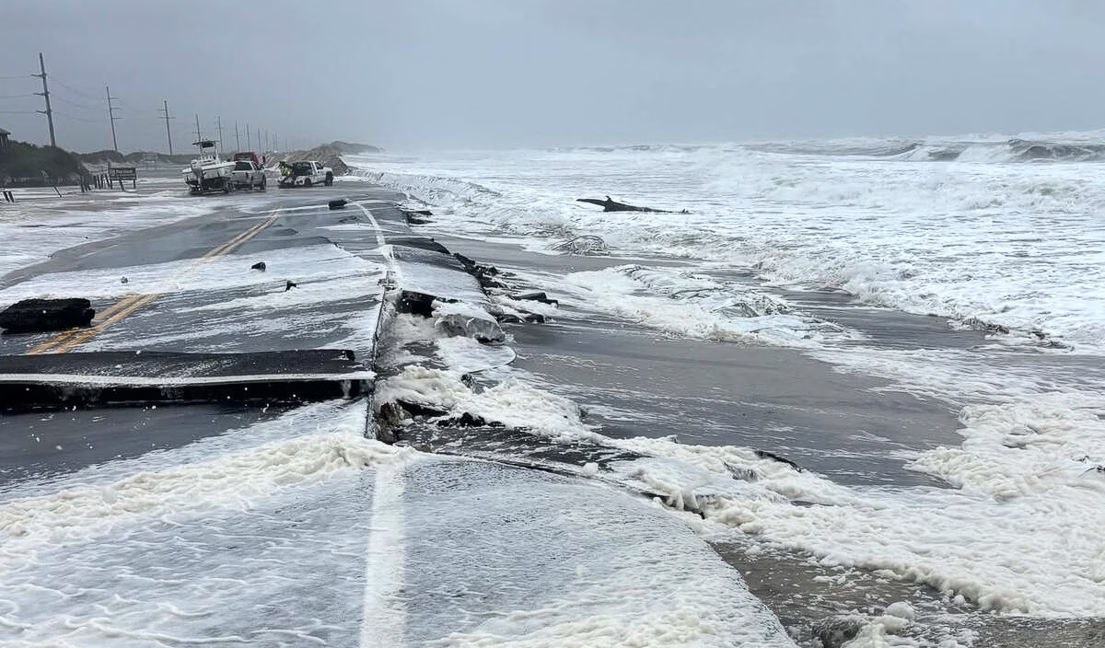
Whether you can cherish this world and its wonderfully slower pace as much as I do is something each of us has to find out for ourselves. But it is threatened not only by time and its modern “blessings,” but also by the forces of nature. The climate crisis, largely of our own making, is no friend to these beaches, which have always been at the mercy of wind, waves, and erosion.
The water comes from every side: from above in heavy rains, from the sea in storm-whipped waves, and from below, rising quietly through the sand.


And then, of course, there is the wind, which carries the sand everywhere and has the power to bury more and more beneath it.


What may look cute or even funny here has, of course, a much darker side…


… one that can be very destructive, as we saw for ourselves during our stay. The nor’easter, whose aftermath we experienced only as wild but sunny weather, had once again badly damaged NC 12 south of Nags Head shortly before we arrived, closing the southern stretch toward Rodanthe to all traffic for well over a week.
Quo Vadis, Outer Banks?
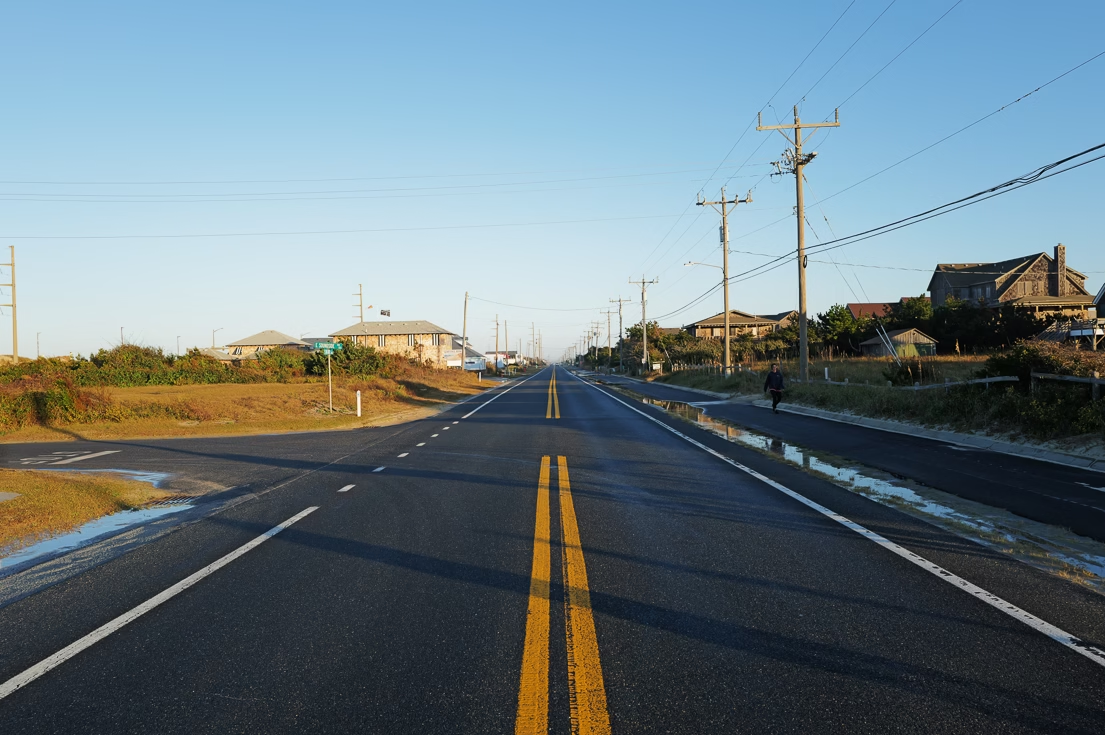
And that is the central question here: where are the Outer Banks headed? Can they find a way to live with climate change and the press of the tourist crowds without losing their soul and their character? Can the stilt houses, undeniably beautiful and romantic but hardly sustainable, survive? And should they?


Is there an economic future to be built on a gentler, more sustainable kind of tourism? And what will all of this do to the culture and the atmosphere that make the Outer Banks what they are?
To be honest, I have no idea. I hope so: for the people who live there, for nature, and for everyone who still wants to see it just as it is right now. Mom and Pop’s island America on the East Coast. And I hope so for myself, too, because I don’t think this was my last time there…
There is always light somewhere – go out and shoot!
No Comments